4550 Eldorado Pkwy, Suite 107, McKinney, TX 75070

Losing a tooth changes more than your smile. It can affect the way you eat, speak, and even how your face looks over time. One of the less obvious effects happens beneath the gums—in the jawbone itself.
Many people are surprised to learn that the bone supporting a missing tooth can begin to shrink soon after that tooth is gone. The good news? There’s a long-term solution that may help preserve both function and bone structure.
If you’ve been considering a dental implant in McKinney, understanding how implants interact with your jawbone can help you make a more informed decision about treatment.
Why Does Bone Loss Happen After Tooth Loss?
Your jawbone stays healthy through stimulation. Every time you bite or chew, your tooth roots transfer pressure into the bone. That stimulation tells your body: keep this bone strong—it’s still needed.
When a tooth is lost, that signal disappears.
Without a root in place, the bone in that area can gradually break down. This process is called bone resorption. It can begin within the first few months after tooth loss and continue over time.
Bone loss after missing teeth can lead to:
- Changes in facial shape or a “sunken” appearance
- Shifting of nearby teeth
- Difficulty chewing certain foods
- Bite alignment issues
- Less support for future restorations
This is one reason dentists often recommend replacing a missing tooth sooner rather than later.
How Dental Implants Work Differently
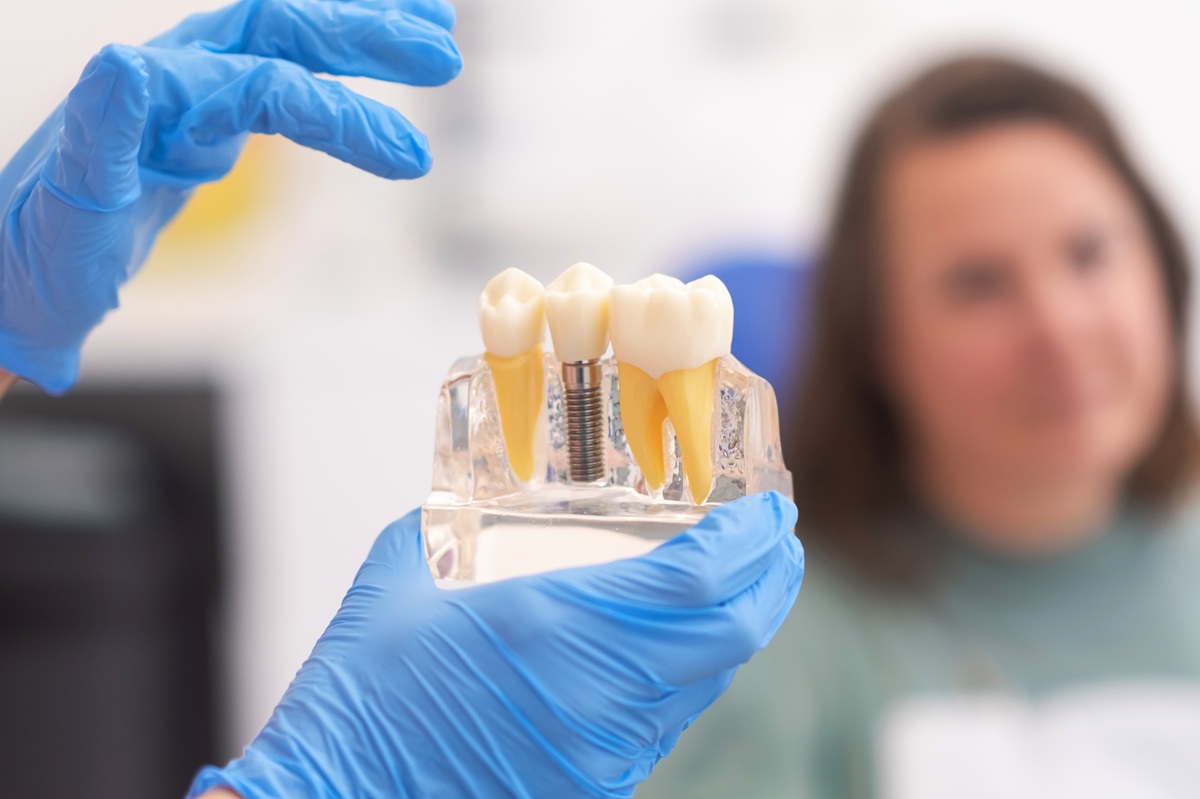
Unlike bridges or removable dentures, dental implants replace the missing tooth root—not just the visible crown.
A small titanium post is placed into the jawbone, where it heals and bonds with the surrounding bone. This process is called osseointegration.
Once healed, the implant supports a custom crown that looks and functions like a natural tooth.
Because the implant sits within the bone, it can continue delivering stimulation during chewing—much like a natural root.
In simple terms:
No tooth root = less stimulation = bone shrinkage
Implant root = continued stimulation = better bone preservation
That’s what makes implants unique.
Can Dental Implants Actually Prevent Bone Loss?
Dental implants are currently considered one of the most effective tooth replacement options for helping reduce bone loss after tooth loss.
That said, it’s important to keep expectations realistic.
Implants may help slow or minimize bone loss in the area of the missing tooth because they restore pressure to the jawbone. They can’t reverse severe bone loss that has already occurred without additional treatment, such as bone grafting.
Think of it like maintaining muscle through movement. Once the body has a reason to use the area again, it tends to maintain it better.
Signs You May Be Experiencing Bone Loss
Bone loss isn’t always obvious at first. Many patients don’t realize it’s happening until their dentist points it out on X-rays.
Some possible signs include:
- Your dentures feel looser than before
- Nearby teeth seem to be shifting
- Your cheeks look less supported
- Your bite feels different
- Difficulty chewing on one side
- A missing tooth space appears deeper or narrower over time
Routine dental exams help catch these changes early.
Why Timing Matters
One of the most common questions patients ask is:
“Can I wait a few years before replacing my missing tooth?”
Sometimes yes—but waiting can make treatment more complex.
The longer a tooth has been missing, the greater the chance of bone loss. In some cases, there may still be enough healthy bone for implant placement. In others, additional procedures may be needed first.
Early evaluation helps determine:
- Bone availability
- Gum health
- Bite alignment
- Whether bone grafting may be recommended
Even if you lost a tooth years ago, it’s still worth asking about your options.
What This Means for McKinney Patients
Here in McKinney, active lifestyles and busy schedules mean convenience matters. Whether you’re grabbing lunch near Eldorado Parkway, heading to Towne Lake Park with family, or commuting across town for work, chewing comfortably and smiling confidently makes daily life easier.
Missing teeth can affect everyday moments more than people expect—from avoiding crunchy foods to feeling self-conscious in photos.
At West McKinney Dental & Orthodontics, patients often ask about long-term solutions that feel stable and natural. For many, a dental implant offers both function and confidence while helping support long-term oral health.
Benefits Beyond Bone Support
Bone preservation is a major benefit—but not the only one.
Patients also choose implants because they can:
- Look like natural teeth
- Stay securely in place
- Help maintain bite strength
- Prevent neighboring teeth from drifting
- Support clearer speech
- Eliminate the need for adhesives
- Make eating feel more comfortable
With proper care, implants can also be a durable long-term solution.
Are You a Good Candidate?
Dental implants work well for many adults, but every smile is different.
You may be a candidate if you:
- Have one or more missing teeth
- Have healthy gums
- Have enough jawbone to support an implant—or are eligible for grafting
- Are in generally good health
- Want a fixed, long-term replacement option
A consultation with dental imaging is the best way to know for sure.
Questions Worth Asking at Your Consultation
If you’re exploring treatment, bring these questions with you:
- How much bone do I currently have in the area?
- Would I need bone grafting first?
- How long does the implant process take?
- What will recovery feel like?
- Will the final tooth match my smile?
- How should I care for the implant long-term?
A good consultation should feel informative—not rushed.
Ready to Explore Your Options?
Tooth loss doesn’t just leave a gap—it can affect the health of the jawbone underneath it. Replacing missing teeth early can make a meaningful difference over time.
If you live in McKinney and are wondering whether a dental implant is right for you, the team at West McKinney Dental & Orthodontics can help you understand your options with a personalized evaluation.
Whether your tooth was lost recently or years ago, now is a great time to ask what’s possible.
Schedule an appointment with us to learn more about restoring your smile—and helping protect the bone that supports it.
Frequently Asked Questions
Does bone loss start right after a tooth is removed?
Bone changes can begin relatively soon after tooth loss. The most noticeable changes often happen in the first year, though the process can continue gradually over time.
Can dental implants reverse existing bone loss?
Implants help preserve existing bone but don’t typically rebuild lost bone on their own. If bone loss is advanced, bone grafting may be recommended before implant placement.
Is getting an implant painful?
Most patients say the procedure feels easier than expected. Local anesthesia is used, and discomfort afterward is usually manageable with standard post-op care.
Can I get an implant years after losing a tooth?
Often, yes. Even if it’s been years, you may still be a candidate. An exam and imaging will show whether additional preparation is needed.
How long do implants last?
With good oral hygiene, regular checkups, and healthy gums, implants can last many years—often decades.