4550 Eldorado Pkwy, Suite 107, McKinney, TX 75070

Getting to the Root of Gum Disease
Scaling and root planing is the most widely recommended non-surgical treatment for periodontal disease. It goes significantly deeper than a routine cleaning, targeting the bacterial deposits that have built up along and beneath the gumline, deposits that are directly responsible for the inflammation, tissue damage, and bone loss that gum disease causes over time.
At West McKinney Dental & Orthodontics, our team performs scaling and root planing with care, precision, and a genuine focus on patient comfort. We take the time to make sure you understand exactly what the procedure involves, keep you comfortable throughout, and set you up with a clear plan for maintaining your gum health long after treatment is complete.
If you have been told you have gum disease or have noticed warning signs like bleeding gums, recession, or persistent bad breath, do not put it off. The earlier gum disease is treated, the more straightforward the solution.
Schedule an Evaluation
What Is Scaling and Root Planing?
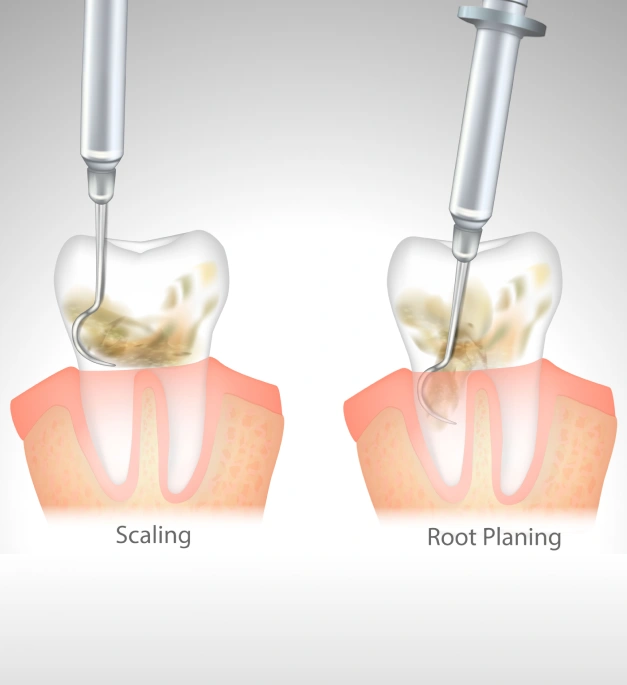
Scaling and root planing is a two-part deep cleaning procedure performed below the gumline, where a standard cleaning cannot reach.
01.
Scaling
Scaling is the process of removing plaque, tartar, and calcified bacterial deposits from the surfaces of the tooth roots, all the way down to the bottom of the periodontal pockets that form when gum disease is present. These pockets are the spaces between your teeth and gums that deepen as the disease progresses and the gum tissue and bone pull away from the teeth.
02.
Root planing
Root planing follows scaling and involves smoothing the root surfaces of the teeth once the deposits have been removed. Rough root surfaces are easier for bacteria to reattach to. Planing creates a clean, smooth surface that makes it much harder for bacteria to cling back on and encourages the inflamed gum tissue to reattach to the tooth root more effectively during healing.
Together, these two steps directly address the source of the infection rather than just managing surface-level symptoms. For most patients with early to moderate periodontitis, scaling and root planing, combined with consistent home care and periodontal maintenance visits, is enough to stabilize the disease without the need for surgical intervention.
Who Needs Scaling and Root Planing?
Scaling and root planing is recommended when a clinical exam and X-rays reveal signs of active periodontal disease that go beyond what a routine cleaning can address. Specific indicators include:
- Periodontal pocket depths of 4mm or greater, particularly with bleeding on probing
- Visible tartar buildup below the gumline detected during periodontal evaluation
- Bone loss visible on X-rays indicating that the disease has progressed past the earliest stage
- Gum recession, persistent gum inflammation, or tissue detachment from the tooth surface
- A history of untreated gingivitis that has advanced to periodontitis
Not every patient who has gum disease requires scaling and root planing. Gingivitis, the earliest and most reversible stage can often be resolved with a thorough standard cleaning and improved home care. Our team will evaluate your periodontal health thoroughly and only recommend scaling and root planing when the clinical findings genuinely indicate it is necessary.
What to Expect During Your Scaling and Root Planing Appointment
Scaling and root planing is performed in quadrants, treating one section of the mouth at a time. Most patients complete the full treatment across two appointments, with one half of the mouth treated per visit. This approach gives the treated areas time to begin healing between sessions and makes the experience more manageable overall.
01.
Periodontal Evaluation Review
Before beginning, our team reviews your periodontal charting, pocket depth measurements, and X-ray findings with you. We confirm which areas are being treated during this visit and walk you through what to expect so there are no surprises.
02.
Local Anesthesia
The treatment area is thoroughly numbed with local anesthesia before anything begins. Scaling and root planing involves working below the gumline, and proper anesthesia is essential to your comfort throughout the procedure. You will feel pressure and movement during treatment but should not feel pain. If at any point something feels uncomfortable, let us know and we will stop immediately.
03.
Scaling Below the Gumline
Using a combination of hand instruments and ultrasonic scalers, our team carefully removes all plaque, tartar, and calcified deposits from the tooth surfaces below the gumline — working down through the periodontal pockets to the base of each one. Ultrasonic scalers use gentle vibration and water to break up and flush away deposits efficiently, while hand instruments allow precise cleaning of specific areas. Both are used together for the most thorough result.
04.
Root Planing
Once scaling is complete, the root surfaces are carefully smoothed with specialized instruments. This step requires precision and takes time — rushed root planing is less effective, and our team does not rush it. The goal is a clean, smooth root surface that supports proper healing and makes bacterial reattachment as difficult as possible.
05.
Irrigation and Adjunct Therapy
After scaling and root planing, the pockets are irrigated to flush away any remaining debris. In some cases, our team may place a localized antibiotic directly into the periodontal pockets to further reduce bacterial levels and support the healing process. This is determined on a case-by-case basis depending on the severity of infection and the response of individual pockets.
06.
Post-Treatment Instructions
Before you leave, our team provides detailed aftercare guidance covering what to eat and drink, how to manage any soreness, what to avoid during healing, and what signs would warrant a call to our office. Following these instructions closely makes a meaningful difference in how well your gums respond to treatment.
Periodontal Maintenance After Treatment
Scaling and root planing is not the end of gum disease treatment—it is the start of long-term management. After treatment, most patients move to a periodontal maintenance schedule instead of routine six-month cleanings.
These visits are typically recommended every three to four months and may include:
- Monitoring gum pocket depths and tissue health
- Cleaning above and below the gumline
- Taking periodic X-rays to track bone levels
- Reviewing and reinforcing home care habits
Because gum disease is a chronic condition, ongoing maintenance is essential to help prevent bacteria from returning and causing further damage. If your gum health remains stable over time, our team may recommend transitioning back to a standard cleaning schedule.
Your Gum Health Cannot Wait. Let Our Team Help.
Gum disease does not improve on its own, but with the right treatment and consistent care, it can absolutely be controlled. If you have been told you need scaling and root planing, have been putting off a visit you know you need, or have noticed symptoms that concern you, the best step you can take is to come in and let our team take a thorough look.
New patients welcome. We treat patients at every stage of gum disease and every point on the road back to health.
Frequently Asked Questions
Q. How is scaling and root planing different from a regular cleaning?
A regular cleaning, called a prophylaxis, removes plaque and tartar from the visible surfaces of the teeth and just at the gumline. It is a preventive procedure for patients with generally healthy gums. Scaling and root planing is a therapeutic procedure that goes significantly deeper, cleaning below the gumline along the tooth roots and inside the periodontal pockets where disease-causing bacteria live. They are different procedures designed for different clinical situations.
Q. Does scaling and root planing hurt?
The procedure itself is performed under local anesthesia and should not be painful. You will feel pressure and movement throughout but not pain. Afterward, some soreness and sensitivity for two to four days is normal and expected. Most patients manage post-procedure discomfort comfortably with over-the-counter pain relievers and saltwater rinses. Many patients tell us the experience was much more manageable than they anticipated.
Q. How many appointments does it take?
Most patients complete scaling and root planing across two appointments, with one half of the mouth treated per visit. Each appointment typically takes 60 to 90 minutes. A follow-up re-evaluation is scheduled four to six weeks after the final treatment appointment to assess results.
Q. Will my insurance cover scaling and root planing?
Most dental insurance plans provide partial coverage for scaling and root planing when it is clinically indicated, though the extent of coverage varies by plan. Our team verifies your benefits before treatment begins and provides a clear cost estimate so there are no surprises. If you have questions about coverage, call our office and we will help you understand what your plan includes.
Q. Is scaling and root planing a permanent fix for gum disease?
Scaling and root planing can effectively stabilize gum disease and halt its progression, but it does not cure it. Gum disease is a chronic condition, meaning the bacteria that cause it can reestablish themselves over time in susceptible patients. Long-term stability depends on consistent periodontal maintenance visits and thorough daily home care. With both in place, most patients maintain healthy, stable gum tissue for many years.
Q. What happens if I skip the follow-up appointment?
The follow-up evaluation four to six weeks after treatment is how we confirm whether the treatment worked and whether any areas need additional attention. Skipping it means we have no way of knowing whether the disease has been adequately controlled or whether further intervention is needed. It is a critical step in the process, not optional.
Q. Can gum disease come back after scaling and root planing?
Yes, it can — which is why transitioning to a periodontal maintenance schedule after treatment is so important. Without regular professional monitoring and cleaning, the bacteria responsible for gum disease can rebuild to harmful levels. Staying on the recommended maintenance schedule significantly reduces the risk of the disease progressing again.
Q. What if scaling and root planing is not enough?
For some patients with more advanced disease, scaling and root planing alone may not fully resolve all affected areas. In those cases, our team discusses referral to a periodontist for surgical evaluation of specific pockets that have not responded adequately to non-surgical treatment. We coordinate that process carefully and make sure you understand every step before moving forward.
Q. Should I be worried about gum recession after the procedure?
Some patients notice that their gums appear to have receded slightly after scaling and root planing. This is almost always a result of the previously inflamed, swollen gum tissue returning to its healthy, firm state during healing — not damage from the procedure itself. It can be a little surprising if you are not expecting it, which is why we discuss it in advance. True recession from the procedure itself is uncommon when treatment is performed with proper technique.
Q. Can I go to work after my appointment?
Most patients can return to normal activities the same day. The local anesthesia typically wears off within two to three hours. We recommend eating beforehand if possible, and sticking to soft foods for the rest of the day. If your work involves a lot of talking, you may find it more comfortable to rest for a few hours while the anesthesia wears off, but there is no mandatory recovery period.