4550 Eldorado Pkwy, Suite 107, McKinney, TX 75070

A Trusted Solution for Missing Teeth
Losing a tooth changes more than the appearance of your smile. It affects how you chew, how you speak, and over time, the health of the teeth and bone around the gap. Missing teeth do not stay quietly in place,neighboring teeth gradually shift toward the open space, the opposing tooth can begin to over-erupt, and bone loss begins in the jaw beneath the gap. The longer a missing tooth goes unreplaced, the more complex the situation becomes.
A dental bridge is one of the most reliable and time-tested ways to address tooth loss. It closes the gap, restores full chewing function, maintains the position of your surrounding teeth, and gives you back a complete, natural-looking smile.
At West McKinney Dental & Orthodontics, our team designs and places custom dental bridges with a focus on fit, function, and aesthetics.
Schedule a Consultation
What Is a Dental Bridge?
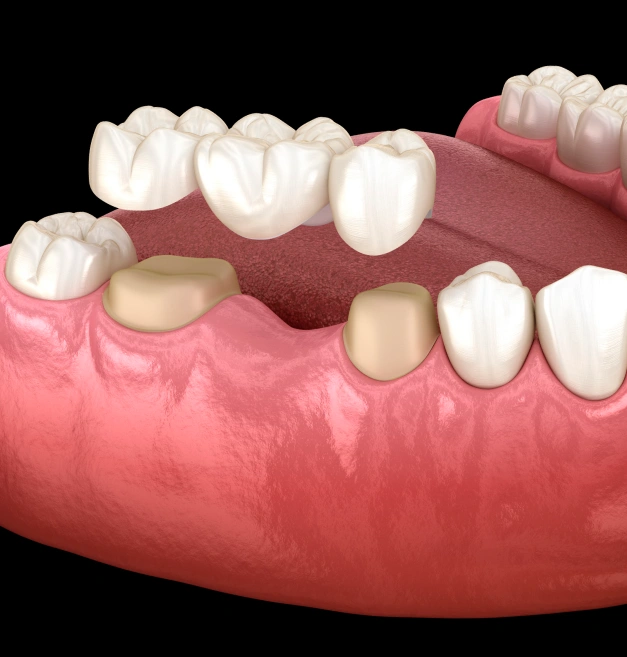
A dental bridge is a fixed prosthetic restoration that literally bridges the gap left by one or more missing teeth. It consists of one or more artificial teeth held in place by dental crowns that are cemented onto the natural teeth on either side of the gap. Those supporting teeth are called abutment teeth.
Once placed, a dental bridge is fixed and permanent. It does not come in and out like a partial denture. You brush and care for it as part of your normal oral hygiene routine, and it functions like a natural part of your smile.
Bridges are custom-made in a dental laboratory to match the color, shape, and size of your natural teeth. The result, when done well, is virtually indistinguishable from the real thing.
How Long Does a Dental Bridge Last?
With proper care, a well-made dental bridge can last 10 to 15 years or longer. The lifespan of a bridge depends on several factors including the materials used, the health of the supporting teeth, your bite, and how consistently you maintain your oral hygiene and routine dental visits.
The abutment teeth supporting the bridge are still natural teeth with roots, which means they are still susceptible to decay and gum disease. Keeping them healthy is essential to the longevity of the bridge. If an abutment tooth fails, the bridge fails with it.
Our team monitors your bridge at every routine exam, checking the fit, the condition of the supporting teeth, and the integrity of the cement seal. Catching any issues early gives us the best chance of addressing them before they affect the bridge itself.
What to Expect During the Bridge Process
Getting a dental bridge at West McKinney Dental & Orthodontics is a comfortable, step-by-step process designed to restore your smile with long-lasting results.
The entire process typically takes just a few weeks, and our team will keep you informed and comfortable every step of the way.
01.
Consultation and Treatment Planning
Our team begins with a thorough exam, X-rays, and a discussion about your smile goals. We evaluate the missing tooth area, the health of the supporting teeth, and your bite to determine the best type of bridge for your needs.
02.
Preparing the Supporting Teeth
The teeth on either side of the gap are carefully reshaped to make room for the crowns that will support your bridge. Local anesthesia is used to keep you comfortable throughout the procedure.
03.
Taking Impressions
Once the teeth are prepared, we take detailed impressions of your smile. These are sent to a dental laboratory, where your custom bridge is crafted to match your natural teeth in shape, size, and color.
04.
Placing a Temporary Restoration
While your permanent bridge is being created, a temporary restoration may be placed to protect the prepared teeth and maintain the space.
05.
Fitting Your Permanent Bridge
Once your custom bridge is ready, our team carefully checks the fit, bite, and appearance to ensure it feels natural and functions properly.
06.
Securing the Final Restoration
After any necessary adjustments are made, your bridge is permanently secured in place, restoring the appearance, function, and stability of your smile.
Is a Dental Bridge Right for You?
A dental bridge is an excellent option for many patients, but it is not the right solution for every situation. The best candidates for a bridge are patients who:
- Are missing one to three consecutive teeth in the same area
- Have healthy, structurally sound teeth on either side of the gap to serve as abutments
- Have adequate bone and gum health in the area
- Are committed to maintaining good oral hygiene and routine care
For patients with insufficient support teeth, significant bone loss, or multiple missing teeth in different areas of the mouth, our team may recommend exploring dental implants or other restorative options instead. In some cases, a combination approach works best.
The only way to know for certain whether a bridge is the right fit is to come in for an evaluation. Our team will give you an honest assessment of all available options and help you make an informed decision.
Ready to Restore Your Smile?
If you are living with a missing tooth or have recently had a tooth extracted, the conversation about replacement does not need to wait. Our team is here to evaluate your situation, explain your options clearly, and help you find the solution that fits your smile, your lifestyle, and your budget.
New patients welcome. We look forward to helping you get your complete smile back.
Frequently Asked Questions
Q. How is a dental bridge different from a dental implant?
A dental bridge replaces the visible portion of a missing tooth using the neighboring natural teeth as anchors. A dental implant replaces the entire tooth, including the root, using a titanium post surgically placed in the jawbone. Implants do not involve the neighboring teeth and provide the most stable, long-term solution available. Bridges are a strong option when implants are not feasible or when a faster, less invasive solution is preferred. Our team can help you understand which option is better suited to your situation.
Q. Does getting a dental bridge hurt?
The preparation of the abutment teeth is done under local anesthesia, so you should not feel pain during the procedure. Some patients experience mild sensitivity and soreness in the days following preparation, which typically resolves on its own. Once the permanent bridge is placed, most patients find it entirely comfortable.
Q. How many teeth can a bridge replace?
A traditional bridge can replace one to three missing teeth in a row. Replacing more than three consecutive teeth with a bridge is generally not recommended because the span becomes too long to support properly. For larger gaps, implant-supported bridges or other restorative options are typically more appropriate.
Q. Will my bridge look natural?
Yes. Modern dental bridges are crafted from high-quality porcelain and ceramic materials that closely mimic the appearance of natural tooth enamel. Our team works with the dental laboratory to match the shade, shape, and translucency of your existing teeth so the bridge blends seamlessly with your smile.
Q. Can a dental bridge fall out?
A properly placed and maintained dental bridge is very secure. However, the cement seal can weaken over time, or the underlying supporting teeth can develop problems that compromise the bridge. If your bridge ever feels loose, shifts, or comes off entirely, contact our office promptly. Do not attempt to re-cement it yourself.
Q. Is a dental bridge covered by insurance?
Many dental insurance plans provide partial coverage for dental bridges as a restorative procedure, though the extent of coverage varies by plan. Our team will verify your benefits before treatment begins and give you a clear picture of your estimated out-of-pocket cost. We never want cost to come as a surprise.
Q. What happens if I do not replace a missing tooth?
Over time, the teeth adjacent to the gap will begin to drift and shift into the open space. The opposing tooth may over-erupt toward the gap. Bone loss begins in the jaw beneath the missing tooth fairly quickly without the stimulation a tooth root provides. These changes can affect your bite, your appearance, and the long-term health of your remaining teeth. Replacing a missing tooth promptly is always the better choice.
Q. How do I clean under my dental bridge?
Regular floss cannot pass between the bridge and the gumline the way it does between natural teeth. A floss threader, super floss, interdental brush, or water flosser can all be used to clean effectively underneath the pontic. Our team will demonstrate the best technique for your specific bridge at your placement appointment.
Q. Can a dental bridge be replaced if it wears out?
Yes. When a bridge reaches the end of its lifespan, it can be removed and a new one fabricated. In some cases, if the abutment teeth have remained healthy and the surrounding bone is adequate, switching to dental implants at that point is also worth considering. Our team will discuss all available options when the time comes.