4550 Eldorado Pkwy, Suite 107, McKinney, TX 75070

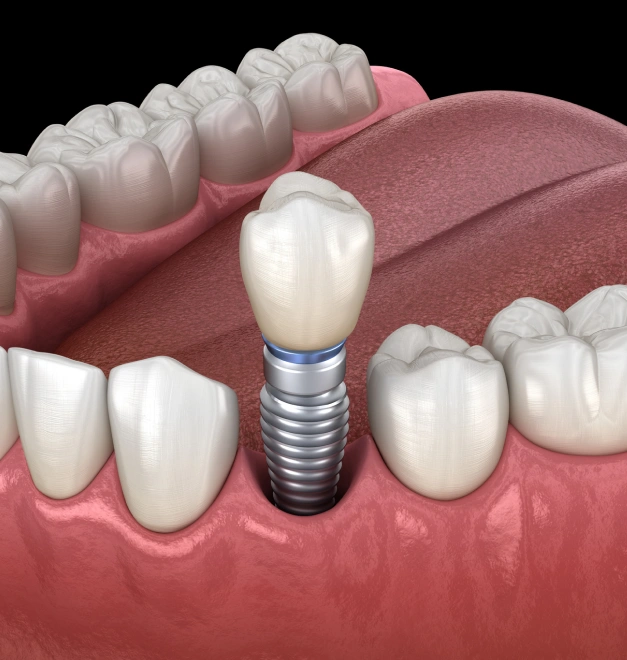
The Gold Standard in Tooth Replacement
When it comes to replacing a missing tooth, a dental implant is the closest option to a natural tooth. Unlike bridges or dentures that replace only the visible part of the tooth, implants also replace the root, creating a strong, stable foundation in the jawbone.
This matters because tooth roots help keep the jawbone healthy and strong. When a tooth is lost, the bone in that area can begin to shrink over time, affecting your facial structure and the stability of nearby teeth. Dental implants help prevent that bone loss while restoring natural function and appearance.
At West McKinney Dental & Orthodontics, our team guides patients through every step of the implant process with personalized care and a focus on long-term results, helping you restore your smile with confidence.
Schedule an Implant Consultation
How a Dental Implant Works
A dental implant is a small titanium post that is surgically placed into the jawbone in the space where a tooth root once was. Titanium is used because of its unique ability to fuse with living bone tissue through a process called osseointegration — the implant literally becomes part of the bone over time, creating a stable, permanent anchor that does not move, does not slip, and does not require adjacent teeth for support.
Once the implant has integrated with the bone, a small connector piece called an abutment is attached to the top of the post. The abutment serves as the foundation for the final restoration, most commonly a custom dental crown, which is permanently secured on top and becomes the visible, functional portion of the new tooth.
The result is a three-part restoration, implant post, abutment, and crown, that replicates a natural tooth from root to tip, with a level of stability and function that no other tooth replacement option can match.
What Dental Implants Can Replace
Implants are versatile enough to address a wide range of tooth loss situations, not just single missing teeth.
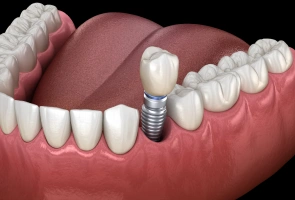
Single Tooth Replacement
A single implant topped with a custom crown replaces one missing tooth completely without involving the neighboring natural teeth in any way. Unlike a bridge, a single implant stands entirely on its own.
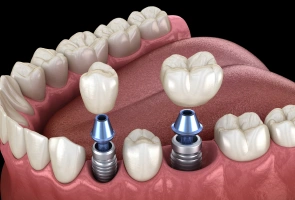
Multiple Teeth
When several teeth are missing, implants can support an implant-retained bridge, a fixed restoration anchored by two or more implants rather than natural teeth. This approach avoids crowning healthy adjacent teeth and provides the stability of implant support across a longer span.
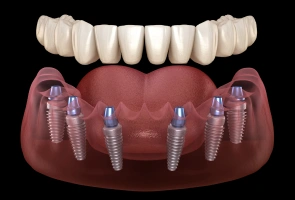
Full Arch Replacement
For patients who are missing all or most of the teeth in an arch, implant-supported full-arch restorations provide a fixed alternative to conventional dentures. Options range from implant-retained overdentures that snap onto a small number of implants to fully fixed implant bridges that are permanently secured and function almost identically to natural teeth.
Our team will discuss which full-arch option is most appropriate based on your bone volume, health, and goals.
What to Expect During the Implant Process
The dental implant process takes place over several months, with most of that time dedicated to healing rather than active treatment. Here is what the process looks like from beginning to end:
01.
Consultation and Treatment Planning
Our team conducts a comprehensive evaluation including a clinical exam, X-rays, and a review of your medical and dental history. We assess bone volume, gum health, and the overall suitability of the implant site. If preparatory procedures such as extractions, bone grafting, or gum disease treatment are needed, we plan those into the overall timeline. You leave this appointment with a clear picture of the full process, the anticipated timeline, and the expected investment.
02.
Implant Placement
The implant placement procedure is performed in-office under local anesthesia. A small incision is made in the gum tissue to expose the bone, a precisely sized channel is prepared in the bone, and the titanium implant post is positioned and secured. The gum tissue is then sutured closed around the implant site. The procedure itself typically takes one to two hours depending on the number of implants being placed.
03.
Osseointegration
Following placement, the implant is left undisturbed while the jawbone grows around and fuses to the titanium surface. This healing and integration process takes three to six months depending on the patient's bone quality, overall health, and the location of the implant. During this period, a temporary restoration may be placed over the implant site to maintain appearance and function.
04.
Abutment Placement
Once osseointegration is confirmed, a small second procedure is performed to attach the abutment to the top of the implant post. In some cases, the abutment is placed at the same time as the implant. A short healing period of two to four weeks follows abutment placement before the final crown is made.
05.
Final Restoration
Impressions of the implant site and surrounding teeth are taken and sent to a dental laboratory where the custom crown is fabricated to match the shape, shade, and size of your natural teeth exactly. At the final appointment, the crown is attached to the abutment and evaluated for fit, bite, and appearance. Any necessary adjustments are made before the restoration is permanently secured.
Are You a Candidate for Dental Implants
Most adults in reasonable health are candidates for dental implants, but a thorough evaluation is always needed before moving forward. Key factors our team considers include:
- Bone Volume Adequate jawbone volume is necessary to support and stabilize an implant. Patients who have experienced significant bone loss following tooth loss may need a bone grafting procedure before implant placement to rebuild the site. This adds time to the process but makes implants accessible to many patients who might otherwise believe they are not candidates.
- Gum Health Active gum disease must be treated and stabilized before implants are placed. The bacteria responsible for periodontitis can affect implants just as they affect natural teeth, and placing an implant in a diseased oral environment significantly increases the risk of implant failure.
- Overall Health Certain systemic health conditions and medications can affect healing and osseointegration. Our team reviews your complete health history before making any recommendations. Conditions such as uncontrolled diabetes, autoimmune disorders, and a history of radiation to the jaw are among the factors that require careful consideration. Most patients with managed health conditions remain good candidates.
- Tobacco Use Smoking and tobacco use significantly impair healing and reduce implant success rates. Patients who use tobacco are counseled on the associated risks and the importance of cessation before and during the implant process.
- Age Dental implants are not recommended until the jawbone has finished developing, which is typically in the late teens to early twenties. There is no upper age limit for implants — they are placed successfully in patients well into their eighties and beyond when health and bone conditions are appropriate.
The only reliable way to know whether you are a candidate is to come in for an evaluation. Our team will be completely transparent about what we find and what your realistic options are.
Take the First Step Toward a Permanent Solution
If you are living with a missing tooth or facing an extraction and want to understand all of your options, a consultation with our team is the right place to start. We will evaluate your situation thoroughly, answer every question you have, and give you an honest picture of whether implants are right for you — and what the full process looks like if they are.
New patients welcome. We are happy to provide a second opinion on implant treatment recommendations from other providers.
Frequently Asked Questions
Q. How long does the dental implant process take?
From initial consultation to final crown placement, the full process typically takes five to nine months for a straightforward single implant case. Cases requiring bone grafting, multiple implants, or full-arch restoration take longer — sometimes twelve to eighteen months or more. The majority of that time is healing, not active treatment. Our team provides a realistic timeline at your consultation so you know what to expect from the start.
Q. Do dental implants hurt?
The placement procedure is performed under local anesthesia and should not be painful during the appointment. Post-procedure discomfort is typically mild to moderate for the first three to five days and is well managed with over-the-counter pain relievers and ice. Most patients tell us the procedure was far more manageable than they expected, and many compare the recovery to a tooth extraction.
Q. How long do dental implants last?
With proper care, the implant post itself can last a lifetime. The crown attached to the abutment typically lasts ten to fifteen years before normal wear may warrant replacement, though many last longer. Long-term implant success depends on good oral hygiene, routine dental care, healthy gum tissue, and avoiding habits like tobacco use that impair healing and long-term stability.
Q. What is the success rate of dental implants?
Dental implants have a long-term success rate of approximately 95 to 98 percent in healthy patients with adequate bone volume. Success rates vary slightly based on the location in the mouth, overall health, and lifestyle factors such as tobacco use. Our team discusses your individual risk factors honestly at your consultation.
Q. Can dental implants fail?
Yes, though it is uncommon. Implant failure can occur if osseointegration does not complete successfully, if the implant becomes infected after placement, or if significant bone loss occurs around the implant over time due to gum disease or excessive bite forces. Risk factors for failure include tobacco use, uncontrolled diabetes, certain medications, and inadequate bone volume at the time of placement. If an implant does fail, it can often be removed and replaced after a period of healing.
Q. Is bone grafting always required before implant placement?
Not always. Many patients have adequate bone volume at the implant site and can proceed directly to placement. Grafting is needed when the available bone is insufficient in height, width, or density to support the implant. This is determined through X-rays and, in some cases, a CT scan during the evaluation. Our team will let you know whether grafting is part of your treatment plan and what that adds to the timeline and overall investment.
Q. Will my implant look natural?
Yes. The crown placed on top of the implant is custom-fabricated from high-quality ceramic or zirconia material, shade-matched to your surrounding teeth, and shaped to replicate the natural anatomy of the tooth being replaced. Most patients cannot identify their own implant crown in a photo of their smile, and neither can anyone else.
Q. Are dental implants covered by insurance?
Dental insurance coverage for implants varies significantly. Many plans classify implants as a non-covered or partially covered service, while others provide meaningful coverage toward the crown component or the surgical placement. Our team verifies your benefits before treatment begins and provides a full cost breakdown. We also discuss flexible payment and financing options for patients who need them.
Q. Can I get an implant if I have had gum disease?
Possibly, yes — but active gum disease must be treated and stabilized before implant placement. Patients with a history of periodontal disease are at higher risk for a condition called peri-implantitis, which is an infection of the tissue and bone around an implant that can lead to implant failure if not addressed. Diligent maintenance and monitoring are especially important for these patients long-term.
Q. What is the difference between an implant and an implant-supported denture?
A single implant supports one crown and replaces one tooth. An implant-supported denture uses multiple implants — typically two to six depending on the design — to support and anchor a full-arch restoration. The implants provide stability and bone preservation that a conventional denture resting on the gum tissue alone cannot achieve. Implant-supported dentures can be either removable overdentures that snap onto the implants or fully fixed restorations that are permanently attached and function almost identically to natural teeth.